Introduction: It’s Not Just About Charging
As a researcher in future mobility, the most common question I get is, "Is charging an EV inconvenient?" My answer is always the same: "You are thinking about it like a gasoline car." Once you understand the Tesla ecosystem, you realize that charging is not a chore but a seamless part of the autonomous driving experience. Here is my breakdown of how it works and why I made a specific choice regarding the battery type.
1. The Basics: AC vs. DC Charging
To understand charging, you must know the difference between the two main types of electricity flow.
- AC (Level 1 & 2): This is your standard "Home Charging." It’s slower but perfect for overnight parking.
- DC (Level 3 Supercharging): This bypasses the onboard charger and shoots power directly into the battery. It is incredibly fast and used for long trips.
2. The Supercharger Advantage: Why It’s Unrivaled
I have extensively used third-party chargers (non-Tesla networks) in Korea, and the experience was often frustrating.
- The Inconvenience of Others: With other networks, you often need bulky adapters (like DC Combo), and the charging speed is inconsistent. Worst of all, you have to open a specific app, handle frequent payment errors, and manually press 'Start' on a sluggish screen.
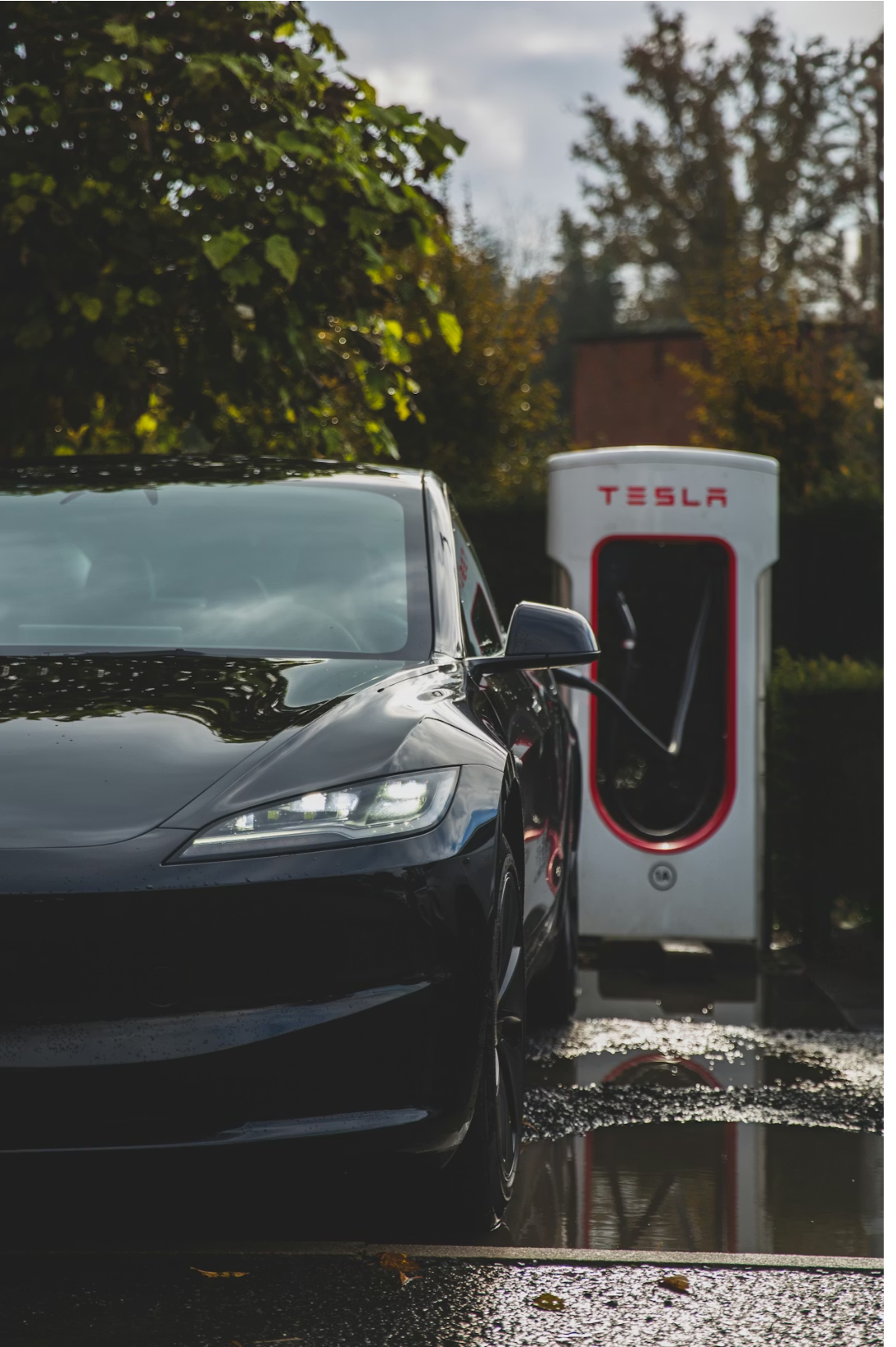
- The Tesla Way: With a Supercharger, you just plug it in. That’s it. The car identifies your account and handles the payment automatically.
- Data & AI Evolution: There is a hidden benefit here. While charging, the car uploads driving data to Tesla’s servers. This massive dataset feeds into their neural networks, constantly evolving Tesla's Full Self-Driving (FSD) capabilities. The Supercharger is not just a charging station; it's a synapse in a learning brain.
3. The Critical Choice: LFP vs. NCM Batteries
This is the most important decision for a new buyer. Tesla Model 3 and Y come with two main battery types, and they are very different.
- LFP (Lithium Iron Phosphate): These are cheaper and have a long cycle life. You can charge them to 100% daily. However, they are heavy, have a shorter range, and perform poorly in cold weather.
- NCM (Nickel-Cobalt-Manganese): These are high-performance batteries. They offer higher energy density, meaning the car is lighter and can travel much further on a single charge.
4. Why I Chose NCM (LG Energy Solution)
I specifically purchased the Long Range model equipped with the NCM battery, and I had a very clear reason for this.
- Origin Matters (China vs. Korea): LFP batteries are predominantly manufactured by Chinese companies (like CATL). On the other hand, the NCM batteries in Tesla are often produced by LG Energy Solution, a top-tier Korean company.
- Trust & Reliability: As a Korean researcher, I have a deeper trust in the manufacturing quality and technological reliability of domestic companies like LG compared to Chinese alternatives.
- Performance: I needed a car that could handle long-distance driving without frequent stops. The NCM battery provides superior range and faster charging speeds, which aligns perfectly with my lifestyle. For me, the reliability of a Korean-made battery and the extended range were worth the extra cost.
Conclusion
Tesla's infrastructure is a mix of superior software and strategic hardware choices. Whether you choose LFP for value or NCM for performance, the ecosystem remains the best in the industry. However, if you value long range and trusted manufacturing, the NCM model is the clear winner.