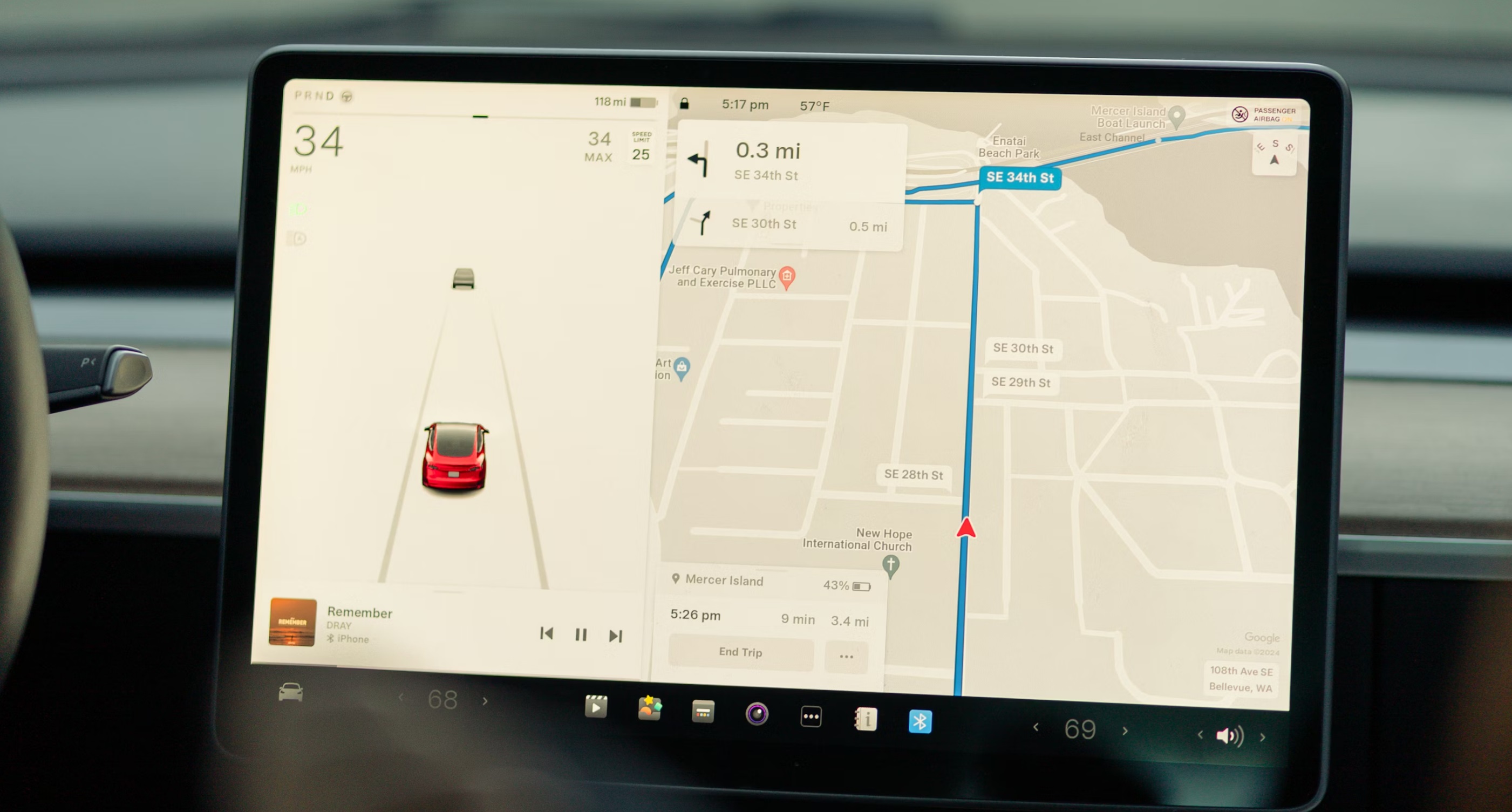
Overview
Tesla Full Self-Driving (FSD) is often mistaken for a fully autonomous system.
In reality, it is an advanced driver assistance software package that still requires active human supervision.
This guide explains what Tesla FSD is, how it works technically, what features it includes, and why it is not yet legally classified as fully autonomous driving.
1. What Is Tesla Full Self-Driving (FSD)?
Tesla FSD builds on the company’s base Autopilot system and expands functionality into urban and complex traffic environments.
It is currently categorized as:
SAE Level 2 driver assistance, meaning:
- The vehicle can control steering and speed simultaneously
- The driver must remain fully attentive
- The driver is legally responsible at all times
Despite its name, FSD does not allow hands-free, mind-off operation in most jurisdictions.
2. How Tesla FSD Works
FSD relies on:
- Multi-camera vision systems
- Onboard neural network processing
- Real-time object detection and path planning
Tesla uses vision-based artificial intelligence trained on real-world driving data collected from its fleet.
The system processes:
- Lane markings
- Traffic signals
- Pedestrians
- Surrounding vehicles
It then calculates steering and acceleration inputs accordingly.
However, environmental complexity and unpredictable events require human oversight.
3. Key FSD Features
Feature availability depends on software version, hardware configuration, and region.
Common capabilities include:
Navigate on Autopilot
Highway navigation assistance including lane changes and exit selection.
Traffic Light and Stop Sign Control
Recognition of traffic signals and stop signs, typically requiring driver confirmation.
Autopark
Automated parking assistance in supported scenarios.
Smart Summon
Low-speed vehicle movement in controlled parking environments with driver supervision.
4. What Tesla FSD Cannot Do
FSD has clear operational limits.
It:
- Cannot function without active driver supervision
- Cannot manage all road or weather conditions
- Cannot assume legal responsibility for driving
- Cannot guarantee zero-error operation
In most regions, regulators require continuous driver monitoring and readiness to intervene.
5. FSD vs Autopilot: Technical Distinction
| Highway Lane Keeping | Yes | Yes |
| Adaptive Cruise | Yes | Yes |
| Traffic Light Recognition | No | Yes |
| Urban Navigation | Limited | Expanded |
| Driver Supervision Required | Yes | Yes |
Both systems currently fall under supervised driving categories.
6. Regulatory and Legal Considerations
Autonomous driving regulations vary globally.
In the United States, regulatory oversight is divided between federal safety agencies and individual states. Most regions:
- Do not classify FSD as fully autonomous
- Require driver supervision
- Maintain legal responsibility with the human operator
Legal definitions often lag behind technological development, creating complexity around deployment timelines.
7. Why FSD Matters Strategically
Although not fully autonomous, FSD represents Tesla’s long-term AI strategy.
Gradual software updates allow incremental capability expansion through:
- Neural network improvements
- Data-driven learning
- Over-the-air deployment
This iterative model differs from traditional automotive upgrade cycles.
FSD development also has implications for:
- Future mobility services
- Fleet automation
- Ride-hailing systems
However, widespread autonomy depends on regulatory alignment and safety validation.
Conclusion
Tesla Full Self-Driving is an advanced driver assistance system, not a fully autonomous solution.
Understanding its capabilities and limitations is essential for safe and responsible use.
While FSD development continues, current versions require active human supervision and remain legally classified under assisted driving frameworks.
https://dfhryd.tistory.com/7
Tesla Autopilot Explained (2026): What It Does — and What It Doesn’t
OverviewTesla Autopilot is one of the company’s most recognized features — and one of the most misunderstood.Despite the name, Autopilot is not a self-driving system. It is an advanced driver assistance system (ADAS) designed to support the driver unde
dfhryd.tistory.com
Disclaimer
This article is for informational purposes only. Drivers must comply with local regulations and remain attentive at all times.